

A few people have asked me for tips or recipes for making their own baby food. 6 months of age is a typical time to begin introducing solids. I began foods with Siri pretty early, around 4 months. This young age may shock some, but she seemed hungry even after a full 6 ounce bottle. Knowing Ben’s metabolism and watching her growth sky rocket, I was not opposed to boosting her intake with solids. I cannot claim to be an expert on making baby food and I may have a narrow viewpoint because I’ve only done this for a few months. But here is what I’ve learned so far!
1. You will need a good blender. I snagged a Baby Bullet on clearance and love how it runs. The top has a removable middle so I can add water while I blend, so I get just the right consistency. It also comes with a mini blender- great for a quick blend, and a milling blade- great for grains. It’s also easy to clean because it’s just three pieces- the top, the bowl, and the blade. However, since the blade and bottom are one piece, there is inevitable waste in the crevices.
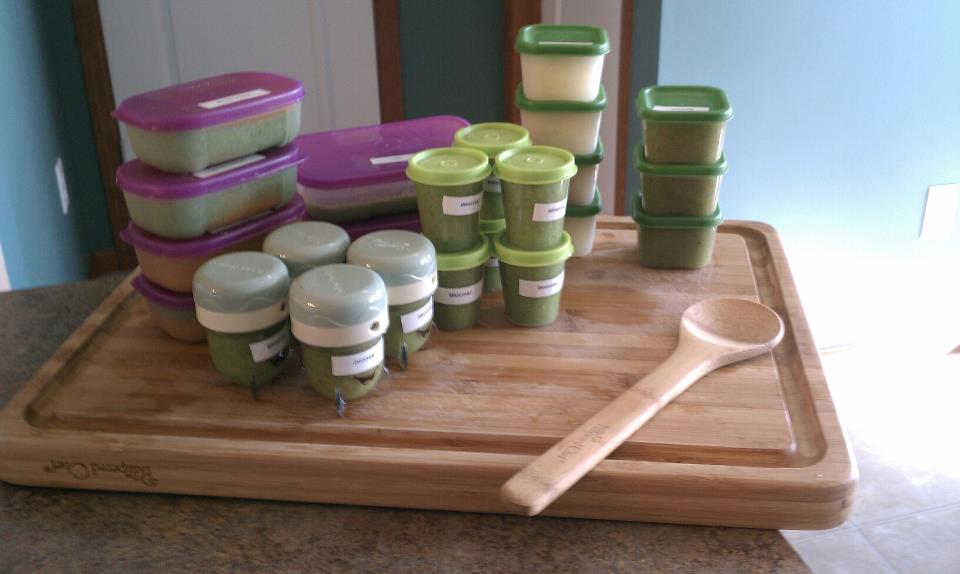
2. Invest in kitchen tools, 1 to 4 ounce food storage containers, and labels. I love my cutting board, wooden spoons, knives, and mini scraper (Pampered Chef, Cutco, Baby Bullet). To store baby food, I use ice cube trays plus an odd assortment of small containers by Green Sprout and Tupperware. Be sure that your plastic tools and containers are BPA free and can handle very hot liquids and purees! For labeling, my first thought was “Why label? I’ll remember what’s in here” but having “mommy brain” is no joke and after 2 weeks I could not remember what I made! I now use a label maker, yet masking tape and a sharpie marker work just as well! Include the food and prep date on the label. After a few weeks, you will be so glad you took the extra 10 minutes to label!
3. Dedicate one morning per month to making food. If you make food often (e.g. twice per week) the task seems overwhelming and you may burn out quickly. So, dedicate one solid morning- about 3 to 4 hours- to making food for your sweet little one. I have increased my food prep days to twice a month since Siri eats like a 12 month old.
4. Prepare the night before. Put the pots on the stove and fill them with purified water. Have all tools clean and out (spoons, collander, scraper, cutting board, food containers, etc). Place all frozen foods out to defrost overnight. This 30 minute prep the night before will save you an hour or more in the morning! Plus, you feel less crazed when everything is at your fingertips and ready to begin.
5. Make food at a time of day when baby is most happy. If you try to cook during a crabby part of the day, you will be continually interrupted and the cooking time drags on for what seems like forever. This is not enjoyable! When baby is happy, she can be content to watch you cook and “taste test” your spoons, scrapers, and measuring cups. 😉
6. If you are so blessed, have a helper. I love when Ben’s brother, Cole, visits because he can soothe Siri if she becomes fussy. I can then concentrate on cooking and not feel any “Momma guilt”.
7. Start simple. By this I mean, cook with familiar foods. If you have never before laid hands on a sweet potato, do not start with this food! If you are completely new to cooking altogether, here are some tips. A fruit or vegetable is thoroughly cooked when you can pierce it with a fork with little force. If time allows, boil or steam foods instead of microwaving. I have heard the science behind this tip, but I do not trust my ability to correctly explain it… The majority of baby foods need to be skinned and boiled. I use a carrot peeler to skin both fruits and vegetables. Spinach, kale, and chard can be steamed. A small portion of foods do not need to be cooked at all: cantelope, watermelon, banana, avocado. Sometimes I briefly steam the avocado or banana to soften them before blending, but this is not a must.
8. Foods can be separate or mixed within reason. Baby has an different sense of taste when compared to a toddler, child, or adult. She does not need a lot of flavor or variety in order to fully explore foods and feel satisfied. I mix fruits and vegetables for fun and I taste test any “odd” concoction to make sure it stays relatively mild (read: bland, diluted). As for mixing, I have had success with these: apple pear, prune carrot, squash potato, avocado banana.
9. Read up on common food allergies and wait to introduce these foods until 1 year old. I defer to the Baby Bullet “Pocket Nutritionist” to choose foods. This manual lists the following foods as “High Risk Allergy Foods”: beans, legumes, berries, buckwheat, cabbage, chocolate, cinnamon, citrus foods, coconut, corn, cow’s milk, cheese- all dairy, egg whites, mango, melon, mustard, nuts, onions, papaya, peanuts, pork, rye, semolina, shellfish, strawberries, soybeans, tofu, tomatoes, wheat, yeast. This manual also lists the following as “Safest First Foods”: sweet potato, avocado, brown rice cereal, peas, zucchini, squash, apples, pears, bananas. In between foods that I’ve tried include broccoli, prune, wild rice, asparagus, carrots, peach, white rice, spinach, and cauliflower. This chart is a nice guideline: http://www.lpch.org/DiseaseHealthInfo/HealthLibrary/growth/fdgd.html
10. Keep a journal to record baby’s reactions to food. For example, Siri has gas after eating potatoes and becomes flushed in the face with bananas. On the other hand, she absolutely loves pears and will settle down if she is having a rough day (e.g. skipped nap, teeth pain).
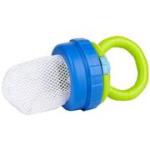
11. Eliminate foods from your list when baby has a moderate to severe adverse reaction. Discuss with your pediatrician the difference between mild, moderate, and severe reactions. When Siri has a mild reaction, I stop the food at the moment but try it again after a month. Because her body is continually developing, some foods are just fine, given some time. If a food tastes strange to you, trust your gut and throw it away. If a food does not work when blended, try to prepare it a different way. Whenever I make plums, they become very acidic. I’ve tried them cooked and raw, skinned and skin-on, separate and mixed- but still too acidic. So Siri gets to explore this food in a Sassy Teether (looks like a netted pacifier) which works for both of us. I’ve also read that this type of teether works wonders for soothing teething pain and irritability, but that is another topic entirely!
12. Lastly, be easy on yourself. Some foods just do not turn out, despite your best intention. I’ve thrown away entire ice cube trays of food, such as potatoes because of her reaction and cantelope because this fruit does not freeze well. If the project becomes too tiring and you no longer enjoy making the food- take a break. Buy pre-made for a while and see if your mood changes. And of course it’s ok to stop. As a mom, you need to find balance between providing for your baby and keeping yourself sane. Because, let’s face it, no one wins when mom is stressed out!
Let me know how it’s going for you and if you come across more tips and ideas. Good luck and happy feeding!





 Jessie Polzin, M/OTRL
Leave a comment