

I donated cordblood when Siri was born in 2011. My thought was: I don’t need it and the baby doesn’t need it and it’s going to be discarded anyway. So why not donate?
In 2011, Ben also got excited about donating once he heard the benefits of cord blood research firsthand through a friend. Without getting into too much detail- umbilical cord blood is a treasure trove of stem cells which can be used in medical treatments and research. Use of cord blood stem cells (or “cord-blood-derived embryonic-like stem cells”) for research is on the rise, as they are an ethical alternative to embryonic stem cells. Donating is free and shipping cost is handled by the facility receiving the donation. Keep in mind, making a public blood donation is altogether different than privately banking the blood.
This time around, Ben’s a pro and was reminding ME to register to donate back in June!
To begin the process of donating, I first needed to talk with my OB and make sure she was comfortable doing cord blood collection, (she was and has collected before for Siri). Then I used the same donation bank from 2011- Duke University. I found this by going to the bethematch website to check if my hospital handles donations. Turns out, hospitals in MN do not have affiliations with cord blood donations (which is weird since the Be The Match Foundation is located in Minneapolis…) So next I researched blood banks that accepted out-of-state donations and decided on Duke University. I completed a short intake survey over the phone, and next they sent me a cord blood kit. Good to know: you must begin the donation process after 30 weeks and before 36 weeks.
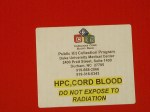
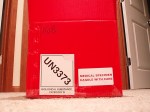
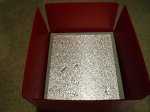
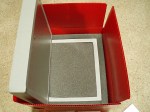
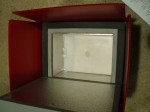
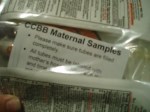
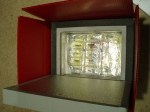
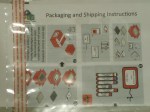
The cord blood kit is a little intimidating at first with its intense packaging and “bio hazard” stickers. I completed the 3 paper-pencil surveys within the kit and will assign a friend to Fed-Ex the cord blood kit within 12 hours of collection. My OB will collect the blood from both the umbilical cord and placenta following the birth. A small sample is also taken from me. (Caveat for those that worry: Practitioners have strict education to FIRST ensure the health of mother and baby and to fully complete the birthing process before attempting collection). Ben and I just need to remember to bring the kit to the hospital when we deliver!
There are no direct or immediate benefits to donating the baby’s blood from either the umbilical cord or placenta. However, if my child or future children are in need of this blood, he/she may receive it upon some conditions. These conditions being that the blood was collected properly (not contaminated or sent after 12 hours of collection) and if the blood is not already used in research or given to a matched person in need. I do not know the cost of “buying back” the cord blood; God willing- I won’t ever have to know.
For more information on cord blood research, refer to “Production of stem cells with embryonic characteristics from human umbilical cord blood”, McGuckin, Forraz, Baradez, et. al. Aug. 2005.
For more information on cord blood donation, refer to www.cordblood.com and www.bethematch.com
For more information on Duke University blood banking, refer to www.cancer.duke.edu/ccbb/



 Jessie Polzin, M/OTRL
Leave a reply to Liz Cancel reply